Lunch is no longer provided for registrations after January 23.
Register now for both Paris days and benefit from the preferential rate:
*Members: you must be up to date with your 2025 membership dues
**DESODF interns: to benefit from free registration, you must be a SBR member (free registration on the website) – excluding lunch
***DU, CISCO and CEFOB: to benefit from the preferential rate, you must be a SBR member (half-rate membership on the website) – excluding lunch
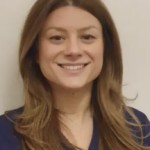
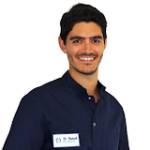
DR GUILLAUME DARMOUNI
Graduated from the Faculty of Marseille in 2011, DU paro clinique in Marseille in 2012, president of the marseille association for the promotion of periodontology, directing founding partner of Lomed training.
For decades, lasers have attracted the dental industry, but finding practical, feasible and realistic applications for everyday use has been difficult. In recent years, the emergence of diode lasers with new wavelengths has revolutionized the use of lasers in daily practice.
Together, we will review the operating principles of a laser, its different wavelengths, and we will jointly discuss clinical applications in dentistry and orthodontics (ODF).
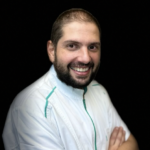
DR DANIEL BOUHNJIK
Former intern at the Paris hospitals — Pitié-Salpêtrière Hospital; Qualified specialist in Dentofacial Orthopedics — Paris VII. Independent orthodontic practice in the Paris region focused on aligners; founder of Aligneur Club
In the field of orthodontics, the use of lasers—particularly diode lasers—is revolutionizing clinical practices. Although this technology has not yet been widely integrated into current orthodontic practices, it offers significant advantages. Lasers provide reliable use, without bleeding and with minimal post-operative follow-up. They are demonstrated in many clinical situations, such as dental undisinclusion, therapeutic or aesthetic gingivectomies.
This presentation explores in detail the clinical applications of diode lasers, their advantages and disadvantages, as well as best practices for their use in orthodontics. Discover how this technology can transform your practice and improve outcomes for your patients.
Break in the middle of the exhibitors


DR CLARA KNAFO AND DR ORIANNE GONDEL
Exclusive periodontists with an activity highly focused on ortho-paro.
Lunch break
DR ANTHONY ATLAN
Former university hospital teaching assistant, Université Paris Descartes, Master in Biomaterials. Private practice in Aesthetic Dentistry and Implant and Periodontal Surgery in Paris, founder of Dentalclub.
Gingival architecture plays a fundamental role in smile aesthetics. Even slight disturbances can have a significant impact on overall aesthetics and generate important patient concerns. The shape and relative position of the teeth in relation to the periodontium mainly determine this architecture. Orthodontic and prosthetic treatments therefore have a strong influence—often underestimated—on gingival harmony.
The aim of this presentation is to clarify the crucial role of orthodontics and prosthetic treatments in this gingival architecture, and to present clinical cases in order to showcase gingival prosthetic, orthodontic, and surgical techniques designed to improve this architecture and, consequently, smile aesthetics.
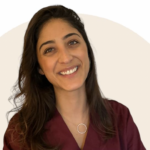
DR RYME LABASSY
Qualified specialist in dentofacial orthopedics, private practice in Poissy. Former intern at the Paris hospitals, chef de clinique of the Paris hospitals.
Intraosseous lesions, consequences of periodontal disease, represent a therapeutic challenge. Periodontal regeneration is defined by Melcher as a reconstruction ad integrum of the architecture and function of the damaged tissues. This goal has achieved varying degrees of clinical success in the literature, but it has not always had sufficient histological confirmation. Over the years, clinicians have sought different ways to enhance these results. Periodontal regeneration is achieved through biological mechanisms closely resembling bone remodeling associated with tooth movement. Based on this premise, some authors state that orthodontic treatment could positively influence healing, and even the regeneration of infrabony defects.
Orthodontics could even become a full-fledged “co-factor” in the periodontal treatment of infrabony lesions. How can the orthodontic contribution to periodontal regeneration be defined?
We will review this little-consensual topic until we suggest new paradigms on periodontal regeneration induced by the ortho-periodontal association. Finally, we will present a longitudinal retrospective study conducted at Hôpital Bretonneau.
Break in the middle of the exhibitors

DR FRANK POURRAT
Qualified specialist in ODF (dentofacial orthopedics) – Lecturer at the DIU lasers and buccal medicine, oral surgery. Trainer in diode laser.
In our day-to-day orthodontic practice, we sometimes find it difficult to carry on our treatment. Indeed, we must address the day-to-day contingencies our patients face. Coronal or root fractures, rotations, and difficulties closing spaces call into question the future of our treatments. Thanks to the diode laser, we can save, immediately, traumatized teeth or teeth that are malpositioned.
Clinical examples with their protocol will help you anticipate orthodontic treatments.