


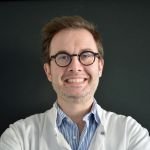

Le nombre de patients diagnostiqués et traités pour un syndrome d’apnées obstructives du sommeil (SAOS) est en constante augmentation. La ventilation par pression positive continue (PPC) reste le traitement de référence pour les SAOS sévères (IAH > 30/H). Ce traitement n’est pas toujours bien toléré ou accepté au long cours. Pour répondre à cette problématique, les traitements alternatifs se développent et, parmi eux, la chirurgie squelettique faciale (« bimaxillaire ») reste un des plus efficaces.
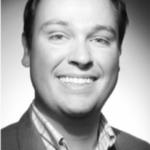
L’expansion maxillaire par ancrages vissésrepose sur la formidable plasticité de la suture intermaxillaire chez l’enfant, mais sa fermeture progressive après la puberté impose souvent une approche chirurgicale pour une expansion efficace. L’introduction des ancrages osseux palatins a redéfini les indications traditionnelles, rendant nécessaire une évaluation rigoureuse pour optimiser le contrôle de la dimension transversale. Nous détaillerons les critères de choix, l’apport crucial de l’imagerie 3D (CBCT) pour une planification précise, ainsi que les principes fondamentaux de mise en œuvre de la disjonction sur appui osseux, afin d’optimiser les résultats.
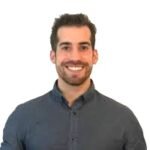

Entre l’orthodontiste et le chirurgien, c’est une vieille histoire de couple. On se côtoie, on s’écrit, on se complète, mais se comprend-on vraiment ?
J’ai eu l’intuition que non. Qu’il restait des zones d’ombre, des non-dits. Alors, pour dissiper ce brouillard, j’ai décidé de franchir la ligne. De passer, littéralement, de l’autre côté du mur.
J’ai interrogé dix chirurgiens maxillo-faciaux. Je ne voulais pas de réponses de manuel, je cherchais leur vérité : >Comment voient-ils notre coopération ?
>Qu’attendent ils de nous ?Mais aussi qui fait quoi?
Et qu’enfin, nos deux monologues deviennent un véritable dialogue.

Les cas de malocclusion de classe III causés par une croissance mandibulaire excessive, associée à une asymétrie faciale due à une déviation mandibulaire, restent un défi majeur dans les traitements orthodontiques .
Cette conférence présente une technique visant à améliorer cette situation jusqu’à un niveau acceptable évitant l’approche chirurgicale.
La technique MEAW-GEAW (multiloop edgewise arch wire et Gummetal edgewise arch wire) est ici employée pour induire une rotation mandibulaire horaire et rétablir un équilibre de la position mandibulaire.
Deux cas cliniques de patients adolescents avec des malocclusion de classe II associées à des asymétries faciales utilisant cette technique seront présentés.

Standardiser la préparation chirurgicale par gouttières : un protocole fiable et reproductible permettant une mise en occlusion rapide.
Par ce protocole contrôlant le plan d’occlusion post chirurgical, les risques de récidives seront maîtrisées.

Le traitement orthognathique est un facteur clé pour gérer les dysharmonies squelettiques, améliorant l esthétique faciale et l occlusion fonctionnelle grâce à la correction de la morphologie des maxillaires.
Les progrès dans la précision du diagnostique et de la bio mécanique ont élargi le champ du traitement orthodontique seul.
Cette présentation expose les limites actuelles des traitements non chirurgicaux et leurs implications dans un plan de traitement contemporain.
L’expansion maxillaire par ancrages vissésrepose sur la formidable plasticité de la suture intermaxillaire chez l’enfant, mais sa fermeture progressive après la puberté impose souvent une approche chirurgicale pour une expansion efficace. L’introduction des ancrages osseux palatins a redéfini les indications traditionnelles, rendant nécessaire une évaluation rigoureuse pour optimiser le contrôle de la dimension transversale. Nous détaillerons les critères de choix, l’apport crucial de l’imagerie 3D (CBCT) pour une planification précise, ainsi que les principes fondamentaux de mise en œuvre de la disjonction sur appui osseux, afin d’optimiser les résultats.

La chirurgie orthognathique est en perpétuelle évolution. Évolution d’abord portée par l’agressivité des réseaux sociaux, ceux des forums de patients et ceux des chirurgiens qui affichent leurs résultats. Souvent, l’image devient le seul support du résultat et réduit la discussion à la modification morphologique ou esthétique appréhendée par les uns, sollicitée par les autres avec une compréhension mutuelle qui est souvent limitée. C’est dommage et probablement dommageable car ce résultat est de loin le moins prédictible. Dans cette mouvance, la céphalométrie est morte et Jean Delaire aussi d’ailleurs, avec l’analyse architecturale qui était la sienne. Mais deux points restent et peuvent être mesurés : la stabilité occlusale, squelettique et dento-alvéolaire et l’équilibre fonctionnel, articulaire, respiratoire, masticatoire voire postural. Autour de ce sujet l’âge de la chirurgie, la croissance résiduelle et le risque de récidive sont encore sujets à débat. Nous avons pris le parti d’une chirurgie de plus en plus précoce et nous essaierons d’en préciser les raisons.
Dès lors, l’autre évolution de la chirurgie orthognathique est purement quantitative. Plus de demande, plus de chirurgiens formés, plus de confiance dans la relation orthodontiste-chirurgien, plus de vulgarisation de l’information. Et cette évolution est aussi portée par des points techniques, la planification tridimensionnelle, la chirurgie guidée ou personnalisée, la RAAC ou récupération accélérée après chirurgie, la chirurgie mini-invasive… Reste la standardisation des techniques qui pourraient finir par nourrir l’apprentissage profond d’une intelligence artificielle. Il y a fort à penser que ceci ne tardera pas. Mais nos patients garderont leur singularité et l’échange et la discussion resteront la base de notre travail. En tout cas je l’espère.
L’orthodontie linguale est apparue dans les années 1970 aux Etats Unis et au Japon; son utilisation, tout d’abord réservée à quelques initiés, s’est largement étendue aux cabinets d’orthodontie classiques dans les années 2000 avec l’arrivée de systèmes entièrement individualisés rendant la gestion des traitements plus facile et permettant l’obtention de résultats thérapeutiques de haute qualité.
Au cours de cette conférence, nous verrons au travers de cas cliniques, les spécificités de la préparation orthodontique en technique linguale dans les cas chirurgicaux, la phase de finition et de contention. Enfin, nous répondrons à la question : existe-t-il des contre-indications à l’utilisation de l’orthodontie linguale dans les cas orthodontico-chirurgicaux.
La plupart des classes III sont habituellement considérées comme « chirurgicales » dès lors qu’elles sont hors de portée d’un traitement orthopédique ou orthodontique.
Mais de quelle orthopédie parle-t-on ? S’agit-il d’une orthopédie précoce ou d’une orthopédie tardive par exemple à l’aide de plaques de Bollard?
Et la locution « hors de portée » signifie-t-elle que les objectifs du traitement sont inatteignables ? Et, dans ce cas, pour quelles raisons ?
En tentant de répondre à ces questions, on est amené à s’intéresser à la nature fonctionnelle des classes III et à l’approche systémique de leur correction.
Cette réflexion aboutit à proposer un traitement préférentiel et postule que la réhabilitation de la mastication serait un dispositif naturel de consolidation des corrections, qu’elles soient
orthopédiques, orthodontiques ou même chirurgicales.
La chirurgie orthognathique et l’orthodontie ne sont pas seulement des interventions
biomécaniques. Elles représentent une modulation profonde de la sphère oro-faciale, avec des répercussions neurosensorielles et psycho-sociales mesurables. Pour les jeunes générations, pressées et préoccupées par leur image, cette transformation n’est pas une simple correction, mais une réconciliation entre l’image de soi perçue et l’image de soi projetée.
La littérature montre que les soins entraine une amélioration significative de la qualité de vie liée à la santé, avec des gains en terme d’estime de soi et d’intégration sociale.
En somme, redessiner l’architecture maxillo-faciale, c’est aussi reconfigurer l’interface avec le
monde.
Bibliographie
Chardat C (2013). Adolescence et esthétique : aspects psycho-odontologique. Thèse Bordeaux
Mary G (2016). Malformation faciale congénitale à l’adolescence : les enjeux psychiques d’une chirurgie réparatrice. Médecine humaine et pathologie. Thèse médecine, Paris Descartes
Benkimoun F (2021). https://labimaxbox.fr/blogs/news/laspect-psychologique-de-loperation-des-machoires-
interview-dun-orthodontiste-psychotherapeute
Jourdan C, Revol O (2024). Le cerveau de nos enfants face au défi du numérique. Sauramp Médical.
Revol O, Sixt O (2024). La Génération Alpha. Réalités Pédiatriques. Décembre 2024
Cymes M, Revol O (2026) : Heureux comme des TDAH ! Albin Michel, 228 p.
Le choix entre un traitement chirurgical ou non requiert une prise de décision qui va au-delà du simple diagnostique squelettique en tenant compte de l’avis est des circonstances de vie du patient.
Cette conférence présente un patient dont le traitement est réalisable selon les deux options. Les facteurs clefs qui influencent la décision (esthétique, fonctions, technique invasive, durée et contexte social) sont évalués. Au travers de ce cas clinique, nous abordons les données diagnostiques et le contexte social pour déterminer une stratégie thérapeutique .
Orthodontie et Parodontie : Alliées ou Adversaires ?
L’orthodontie joue un rôle clé dans la santé parodontale, avec des effets souvent bénéfiques mais parfois délétères. Elle permet, par exemple, d’améliorer l’hygiène buccale en corrigeant des malpositions, ou bien de rétablir la fonction suite à des migrations secondaires, conséquences fréquentes des maladies parodontales. Cependant, des mouvements non contrôlés ou une contention inadaptée peuvent entraîner des récessions gingivales et des complications parodontales. Une approche pluridisciplinaire est essentielle pour maximiser les bénéfices tout en minimisant les risques pour les tissus de soutien des dents.
SQODF & consultant dans un bureau d’études spécialisé dans la transition bas-carbone
Vers un cabinet bas-carbone : problématiques et solutions
D’où viennent nos impacts, et quels sont nos leviers d’action à court, moyen et long terme ? Cette présentation, pensée comme une discussion entre le Dr Pastwa et le Dr Oosthoek, tentera d’alimenter la réflexion sur la décarbonation de notre activité, et plus largement sur ce qu’implique la transition vers un cabinet plus durable.
Docteur en Chirurgie Dentaire – Spécialiste en Orthopédie Dento-Faciale – Ancienne Interne des Hospices Civils de Lyon – DU de Droit Médical – Faculté de Droit Université de Lorraine
1. Vers une écoresponsabilité au cabinet, les problèmatiques /les solutions (conférence conjointe avec le Dr Justin Oostoek
À l’heure du défi climatique, le chirurgien-dentiste omnipraticien et spécialiste se doit d’intégrer dans sa pratique quotidienne des mesures visant à réduire l’impact environnemental de son cabinet. Mais peu de données existent sur les enjeux de la transition écologique en odontologie.
2. Dépose des attaches orthodontiques et intégrité de la surface amélaire
L’objectif d’un protocole de dépose est de garantir le retrait complet de la résine composite sans altérer la surface de l’émail. Une revue systématique a été conduite afin d’analyser l’impact de la dépose orthodontique sur la surface amélaire.
L’orthodontie de demain /thérapeutique fixée versus gouttières d’alignement
Comment associer ses patients à une démarche éco-responsable pour essayer de comprendre son impact écologique
L’exercice de notre métier d’orthodontiste a un impact écologique non négligeable.
Exercer en occultant cet aspect est difficilement acceptable aujourd’hui, et tout l’intérêt de cette conférence est d’essayer de proposer et d’expliquer un projet écologique reproductible, permettant de minimiser cet impact tout en y associant son équipe et ses propres patients.
Directeur pédagogique du « Diplôme Universitaire de Médecine Environnementale » le DUME, CHU Henri Mondor, Faculté de Médecine Paris/Créteil.
Les perturbateurs endocriniens : quels risques pour la santé
Chargé d’enseignement universitaire dans le département d’odontologie conservatrice – endodontie à la faculté de chirurgie dentaire de Strasbourg
-Coordinateur pédagogique du DU d’esthétique du sourire de Strasbourg
Comment traiter les leucoses ou white spot
L’exigence esthétique est croissante, particulièrement en fin de traitement orthodontique.
Nos patients acceptent difficilement des disharmonies de forme, de couleur ou de symétrie après avoir passé de nombreux mois, voire des années, chez l’orthodontiste.
La dentisterie préservatrice, basée sur l’adhésion, permet de résoudre efficacement ces doléances de fin de traitement en s’adaptant à l’âge du patient.
Cette dentisterie esthétique s’impose aujourd’hui comme une véritable aide à la finition des traitements orthodontiques grâce à des techniques comme les composites injectés, les facettes, les bridges cantilever, l’infiltration des taches par érosion, les éclaircissements, etc.
Cette conférence a pour objectif d’expliquer, par l’intermédiaire de nombreuses vidéos cliniques, l’apport de ces techniques préservatrices esthétiques dans la finition des traitements orthodontiques.